
Supporting analytical laboratories
in microplastic research
Since 2024
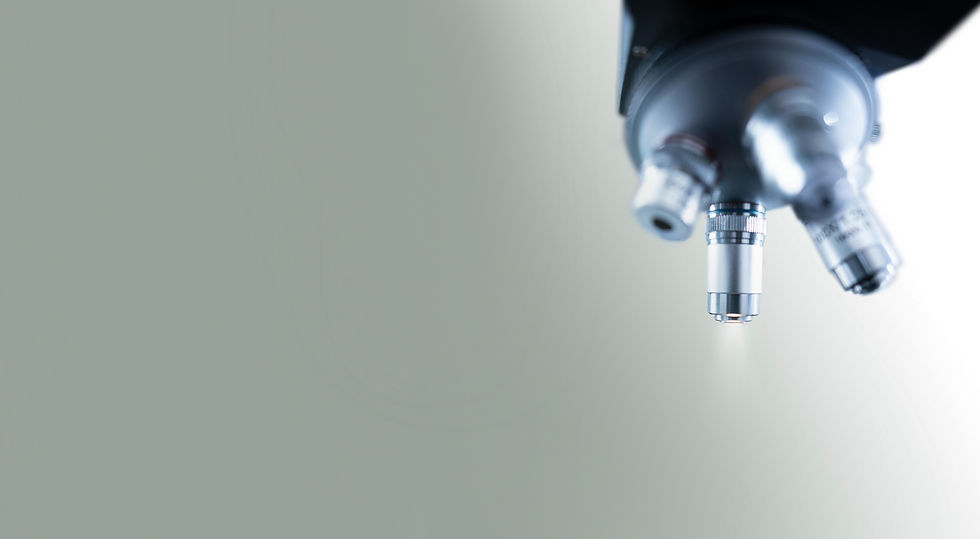
µRaman microplastics analysis


From sample pretreatment to data reporting
We conduct microplastic analyses across all sample matrices, detecting and identifying particles down to 1 µm in diameter. In our dedicated laboratory, we manage every step; from sample preparation and extraction to analysis and reporting, using protocols tailored to your sample matrix.
By combining automated Raman microspectroscopy with computer vision-based post-processing software, we reduce analytical bias and analyse thousands of individual particles, providing you with a comprehensive microplastic dataset.





Acquire microplastics data in four simple steps

Step 1: Consultation
To ensure the best results, we first discuss your sample and your expectations before providing you with a quote. This is an important step in ensuring high-quality microplastics data.

Step 2: Send us your sample
Following our first consultation, you post your raw sample to the address of our laboratory, where we initiate sample processing and analysis by µRaman spectroscopy.

Step 3: Treatment and analysis
We manage each phase, from sample pre-treatment to automated Raman microspectroscopy, quality assurances and data processing. This step requires 6-8 weeks.
Data guarantee: If we are unable to process your raw sample in a way that permits a meaningful microplastic analysis, we will refund the cost of the service of that sample!

Step 4: Comprehensive data report
Our services inlcude comprehensive data normalization and presentation. Scroll to learn more about our data and the process behind it.
"We recognize there is no universal approach to microplastic analyses but realize that transparency is the key to good data"
By sorting and normalizing your data, we provide comprehensive diagrams, detailing both size and polymer type distribution. In addition, we provide you with access to all raw data. For more accurate extrapolation, we compare the area of particles analyzed with the total area of particles on the filter membrane. We report on- and correct for analytical microplastic loss (positive control) and procedural contamination from the protocol (negative control).

-
Polymer composition
-
Size distribution
-
Mass distribution
-
Reporting limits (RL)*

-
Blank contamination**
-
Procedural loss (recovery)
-
Falsely partitioned particles

-
Microplastics (n)/g or mL
-
Microplastics (µg)/g or mL

* Reporting limits (RL) on the basis of blank contamination, are required in the analysis of drinking water according to ISO/DIS 16094-2.
** We offer to perform blank correction in your samples, except drinking water samples where this practice in considered non-conform.
Negative control [procedural blank]
Pair identification: When two particles in the primary sample and the blank match in polymer type and size they form a 'pair'. Once a pair is identified, the microplastic particle in the primary sample is subtracted, and its matching particle in the blank can no longer be used for subtraction.
Priority of subtraction: Microplastic particle pairs that are closest in size should be subtracted first.
Size limitation: If the diameter of any particle in the primary sample exceeds twice the size of the largest microplastic particle (of any polymer type) detected in the blank, it cannot be subtracted.

How do we perform blank correction?
Blank correction guidelines


Preventive measures
We have replaced all traditional laboratory hardware with glass or polytetrafluoroethylene (PTFE) equivalents. All glassware is kiln sterilzied (muffled) at 500°C for one hour, prior to use. In addition, all our chemical solutions are filtered through submicron membranes to remove plastic contaminants. All sample processing and analysis is carried out under laminar flow cabinets in our dedicated microplastic laboratory located in Toulouse, France.
Correctional measures
Microplastics are ubiquitous pollutants and we recognize that fact. Therefore, we take quality control very seriously. Procedural blanks (negative controls) are included as standard at no additional cost (one per sample type).. In our experience, microplastic data lacking blank- and recovery control, has litle value. In addition to contamination, we also correct for the unintentional loss of indigenous microplastics by conducting environmentally relevant microplastic recovery experiments.
Important: we provide both blank corrected and non-blank corrected data.
For drinking water samples we do not blank subtract but instead apply reporting limits (RL) according to ISO 16094-2.
Positive control [recovery correction]
Sample preparation, including digestion, transfers and filtration, can lead to indigenous microplastic loss, while particle fragmentation can increase the apparent particle count. Recovery testing is therefore essential to assess how the analytical procedure affects the results.
At Microplastic Solution, recovery testing is included as standard in all our analyses, at no additional cost. We use our own environmentally relevant reference materials, including fragments and fibers, to assess recovery across particle size groups. Testing is performed in triplicate for each sample type and preparation protocol, providing a robust basis for evaluating method performance and interpreting the results.
All our analyses include microplastic recovery testing as default

Recovery experiment using:
ExactMP™ is an original concept developed by Microplastic Solution to meet the need for precise microplastic reference materials.
ExactMP™ enables highly reproducible dosing of microplastic particles, minimizing variability between individual samples. This is achieved by dispersing microplastics in a pure, fully water-soluble Pullulan film derived from natural polysaccharides.
While embedded in the film, the microplastic particles remain fixed in position and homogeneously distributed, allowing the particles to be imaged, counted, and verified prior to use. Upon contact with water, the Pullulan matrix dissolves completely within less than an hour, releasing the microplastics without introducing interfering residues.
Assortment
ExactMP™: Precision-microplastic reference materials


Intelligent data treatment and normalization

Our proprietary computer vision-based software cleverly facilitates the correction of false positives by merging unintentionally partitioned microplastics, resulting from the physical limitation of Raman instruments. Additionally, we always perform manual inspection of spectral matches with hit quality index values above 65%, further eliminating false positives.


microplasticsolution.com
+ 33 6 72 05 29 17

Addresses:
Administrative HQ: 9 rue des enfants d'Izieu, 31320 Castanet-Tolosan, France.
Laboratory: 6 impasse Dordac, 31650 Saint-Orens-de-Gameville, France.

© 2026 SAS Microplastic Solution. All rights reserved
Est. 2024
