
Supporting analytical laboratories
in microplastic research
Since 2024

Microplastic Beads
10-30 µm | 40-60 µm | 100-140 µm
Microspheres, commonly referred to as beads, are widely used in microplastic research as practical and well-established surrogates for environmental microplastics. Their defined size, shape, and polymer composition make them reliable tools for method recovery experiments. While they do not aim to replicate the full complexity of environmental particles, microplastic beads remain highly relevant and accepted reference materials, supporting reproducible, controlled, and comparable microplastic research.

Assortment
Microplastic beads/spheres reference materials


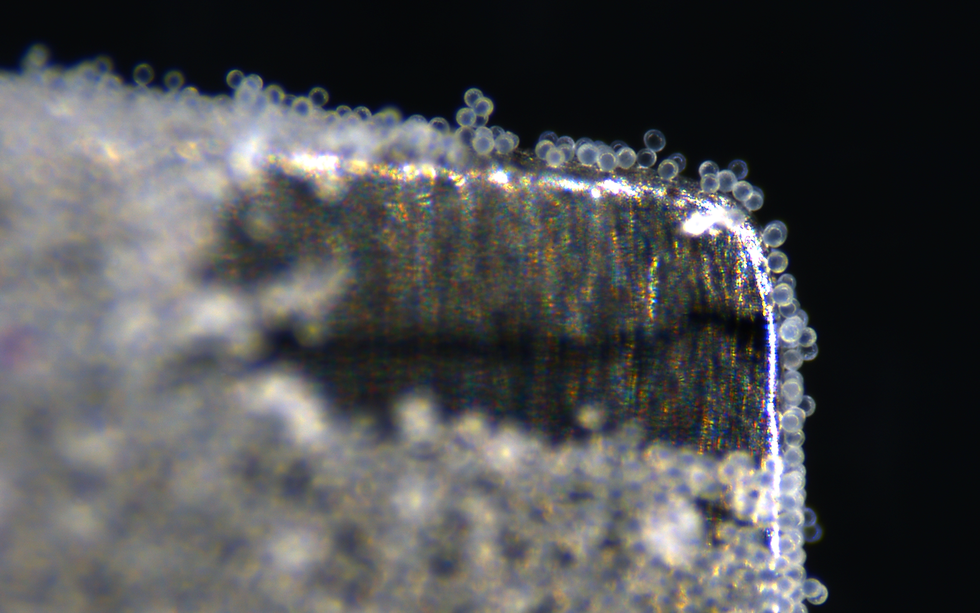


Microplastic beads are useful tools in research
We prepare samples of known quantities of beads in various size ranges from 10 µm and upwards, in a wide range of polymer types and colors. Save your time and effort and let us do the counting for you. Microplastic beads are useful tools for beginners and experts alike. Our assorment includes beads from 10-30 µm, 40-60 µm and 100-140 µm.

EasyMP™
From €299.95 | €399.95
30 mL
100 mL
Beads


For use in advanced microplastic research. Microplastic concentration with less than 20% relative standard deviation (RSD). Competitive prices and user-friendly application. 30 & 100 mL self-dose pippete bottles in 95 vol.% ethanol, and water w. 20 vol.% ethanol + 0.05 vol.% Tween 20 solution.


ExactMP™
From €50 per sample
Beads

A defined number of microplastic beads embedded in a water soluble pullulan film. Ideal for recovery experiements and other quality control applications.


microplasticsolution.com
+ 33 6 72 05 29 17

Addresses:
Administrative HQ: 9 rue des enfants d'Izieu, 31320 Castanet-Tolosan, France.
Laboratory: 6 impasse Dordac, 31650 Saint-Orens-de-Gameville, France.

© 2026 SAS Microplastic Solution. All rights reserved
Est. 2024