
Supporting analytical laboratories
in microplastic research
Since 2024

Microplastic Fibers
50 - 1000 µm | + Custom lengths
We offer a diverse selection of natural, synthetic, and semisynthetic fibers starting from 50 µm in length. Our fibers are available in various colors with precisely known concentrations and size distributions. Whether you're studying environmental impact, degradation processes, or health effects of fibers, our microplastic reference materials enable more comprehensive microplastics research.

Assortment
Microplastic fiber reference materials


Environmentally relevant microfibers
At Microplastic Solution, we focus on polydisperse microfibers because we believe this is a better representation of environmental microfiber pollution.
We offer different formats depending on how the material is used:
-
EasyMP™: liquid dispersion; ready-to-use suspensions for routine work and method development, and in dry, neat format for flexible spiking, custom preparation and other larger-scale exposure studies.
-
ExactMP™: defined particle numbers and compositions for calibration and validation.
For all sample types, we provide detailed information on fiber concentrations and fiber lengths across defined size groups.
All materials are designed to be compatible with common analytical workflows with a focus on consistency and practical use.

EasyMP™
From €299.95 | €399.95
30 mL
100 mL
Fibers


For use in microplastic research and testing. Microplastic concentration with less than 20% relative standard deviation (RSD). Competitive prices and user-friendly application. 30 & 100 mL self-dose pippete bottles in 95 vol.% ethanol, and water w. 20 vol.% ethanol + 0.05 vol.% Tween 20 solution.

ExactMP™
From €71 per sample
Fibers

A defined number of microplastic fibers embedded in a water soluble pullulan film. Ideal for recovery experiements and other quality control applications.
250 mg: 449.95€
500 mg: 599.95€
1000 mg: 799.95€

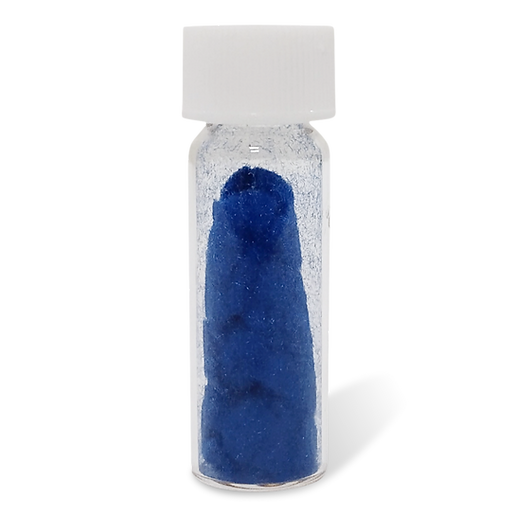
Dry, neat
Fibers are also available in dry format in 250 mg (0.25 g), 500 mg (0.5 g) and 1000 mg (1.0 g) aliquots, consisting of approximately
n = 500k fibers n = 1 million fibers, n and = 2 million fibers, respectively.
Ideal for ecotoxicology studies


Step 1:
Pluck and weigh desired quantity of dry fiber.
Note: the number of fibers per mg and the fiber length distribution is provided. Data is based on four subsamples.


Fibers disperse easily in pure water,
only by mechanical mixing.
Tip: For improved dispersion, add
0.01–0.05 vol.% Tween 20 to
the aqueous solution
Step 2:
We recommend dispersing the dry fibers in a water solution containing 0.05 vol.% Tween. Alternatively, the fibers can be mixed into dry sediment and dispersed through mechanical mixing.

Mixed polymer fibers
Validate your protocol against six different polymers, including fully synthetic, semisynthetic, and natural fibers; each polymer type coded in a unique color.


We care about your data
Each micrograph is manually inspected to correct for overlap and agglomeration of fibers.
This process is applied to each of the four subsamples that make up your unique sample. Accurate corrections lead to precise particle distribution estimates, which ultimately enhance the reliability of your research findings.

- and it shows
Researchers worldwide are fully satisfied with our microfiber reference materials. Go to the webshop and design your own microfiber reference sample.
(7/7 reviews)


microplasticsolution.com
+ 33 6 72 05 29 17

Addresses:
Administrative HQ: 9 rue des enfants d'Izieu, 31320 Castanet-Tolosan, France.
Laboratory: 6 impasse Dordac, 31650 Saint-Orens-de-Gameville, France.

© 2026 SAS Microplastic Solution. All rights reserved
Est. 2024